

The foundations of the People’s Republic of China’s modern intelligence and security architecture were laid not with the 1949 revolution, as commonly believed, but in the chaotic atmosphere of the 1920s. Chinese intelligence history is inseparably linked to the struggle for survival of the Communist Party of China (CPC) during its most turbulent years. At the center of this legacy lies the Central Special Branch, known by its Chinese name Zhongyang Teke (中央特科). Founded in the late 1920s, this structure served as the CPC’s primary weapon on the “underground front,” waging a secret war against the Nationalist Party (Kuomintang) and foreign powers.
Establishment and Leadership
Zhongyang Teke was officially established on November 11, 1927, in Shanghai. Its establishment was a direct response to the brutal communist purge carried out by Chiang Kai-shek earlier that year, which forced the party to retreat into the shadows.
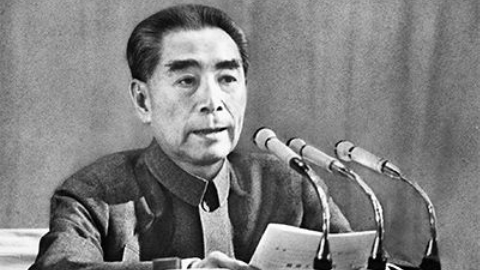
The main architect and leader of this secret organization was China’s future Premier, Zhou Enlai. Zhou, who mastered secrecy and escape during his years as an activist in Europe (especially Paris), applied his “escape artist” skills and organizational discipline to build the party’s first professional secret police force.
Key Figures and Soviet Influence
The development of Zhongyang Teke was heavily influenced by Soviet intelligence models. The Soviet secret police, the Cheka (and later the GPU), provided training in espionage, counter-insurgency, and secret communications.
- Gu Shunzhang: A former magician and member of the Green Gang (a secret society), Gu was sent to Vladivostok by the Comintern to learn advanced espionage techniques. Upon his return, he organized the “Red Detachments” to carry out high-risk operations and protect party leaders.
- Kang Sheng: Working alongside Gu in Shanghai, Kang Sheng became an important figure in the organization. Kang’s expertise was primarily in ideological security and counter-intelligence; this experience would later make him one of the most feared architects of China’s internal security mechanism.
The “31 Catastrophe” and the Betrayal of Gu Shunzhang
The year 1931 was a turning point for the organization. Gu Shunzhang, the operational brain of the organization, was captured in Wuhan and immediately defected to the Nationalist Party (KMT). Gu knew the entire underground network in Shanghai, the safe houses, and the locations of top leaders, including Zhou Enlai. This “betrayal” could have caused the complete destruction of the CPC. However, the agent Qian Zhuangfei, one of the “Three Heroes of the Dragon’s Lair” who had infiltrated the KMT, managed to deliver this information to Zhou Enlai. Zhou evacuated the headquarters in Shanghai with only a few hours’ notice, saving the party from absolute destruction.
Operational Structure: 4 Main Branches
Zhongyang Teke consisted of four specialized task-oriented branches (Ke), which are considered prototypes of modern intelligence services:
| Branch | Area of Responsibility | Details |
| 1st Branch (Zongwu Ke) | General Affairs | Logistics, financing, and organization of secret meetings. |
| 2nd Branch (Qingbao Ke) | Intelligence | Infiltration of enemy units and collection of strategic information. |
| 3rd Branch (Hongdui) | Red Detachments | Assassinations, execution of traitors, and physical protection of the leadership. |
| 4th Branch (Wuxiandian Ke) | Wireless Communications | Management of radio communications and secret encryption systems. |
Terminology and Technical Capabilities
The organization was characterized by a “dual structure” that still exists in Chinese intelligence today: a technical head for operations and a political commissar to ensure ideological alignment with the party’s strategic goals.
Technically, one of its greatest achievements was the complex encryption system developed by Zhou Enlai, known as “Wu Hao” (Number Five). This code went down in history as China’s first professional military/political cryptology system, which the KMT and foreign services of that period failed to break.
Legacy and Evolution
By the 1980s, the organization evolved into the Central Investigation Department under the leadership of prominent figures like Luo Qingchang. In 1983, it merged with elements of the Ministry of Public Security to form the modern Ministry of State Security (MSS).
The spirit of Zhongyang Teke is celebrated in China even today. In May 2017, a ceremony was held in Beijing for the 90th anniversary of the organization to honor the “unknown agents” fighting on the “underground front.” Under the administration of Xi Jinping, this legacy is used to emphasize the continuity of China’s “secret war” against external and internal threats.




Discover Dispatcharr: The Ultimate Open-Source IPTV and EPG Management Powerhouse
What is HAARP? Artificial Earthquakes Tesla’s Mysterious Legacy
Alibaba Issues Notice: Full Ban on All Anthropic Claude Series Models and Claude Code Programming Agent Effective July 10
OpenSquilla 0.4.0 Released: AI Coding Can “Self-Verify” for the First Time