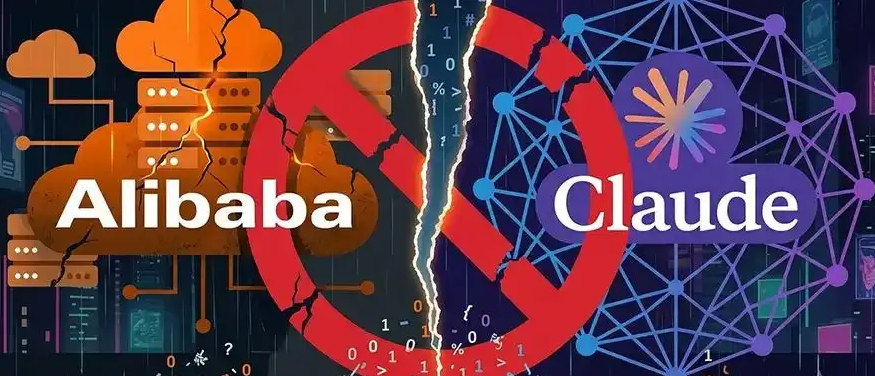
According to joint industry reports from Zhidx and Phoenix Tech on July 3, 2026, the Sino-US AI industry rivalry has reached a landmark escalation point: Alibaba has officially issued a company-wide notice banning all Anthropic Claude series models and the Claude Code programming agent effective July 10, requiring employees to uninstall all clients and terminate API access. In a reciprocal countermeasure, Anthropic simultaneously launched large-scale, indiscriminate account bans targeting Chinese users. Compounding the situation, the community reverse-engineered and exposed a Unicode steganographic tracking mechanism built into Claude Code targeting domestic users,彻底 breaking technical trust.
💡 Who Invented AI? The Visionaries Behind the Intelligent Machines
During the same period, major domestic tech companies simultaneously tightened cross-camp model usage permissions: Meituan issued internal control documents,全面 restricting business teams’ use of ByteDance’s Doubao, and requiring business systems to prioritize migration to its self-developed LongCat-2.0 or DeepSeek domestic models. Overseas, Meta concurrently issued regulations prohibiting internal R&D personnel from using Claude Code and OpenAI Codex overseas programming tools.
💡 Who Invented the Electric Scooter?
This series of连锁 actions marks the escalation of the AI geopolitical博弈 from mere “official exchange of complaint letters” to实体 confrontation involving mutual corporate bans, large-scale platform account suspensions, and industry camp fragmentation. Simultaneously, the exposure of Claude Code’s built-in covert regional tagging mechanism has prompted global developers to重新 evaluate the data privacy and security boundaries of overseas AI tools.
This article, based on first-hand media reports, reverse engineering technical analyses, and in-depth expert industry commentary, comprehensively outlines the incident’s triggers,双方 countermeasures, underlying technical vulnerabilities, and long-term industry fragmentation trends. All information is traced back to authoritative tech media, overseas developer community reverse engineering documents, and internal corporate control notices, with no AI-generated fictional speculation.
I. Complete Event Timeline: From Distillation Allegations to Bilateral Blockades
1. The Trigger: Anthropic Unilaterally Accuses Alibaba of Large-Scale Model Distillation (June 10)
According to a June 3 report from Sohu Tech, Anthropic submitted a formal letter to the U.S. Senate Banking Committee on June 10, unilaterally accusing Alibaba of conducting 28 million Claude dialogue interactions over a two-month period (April 22 – June 5) using 25,000 fake accounts. Anthropic characterized this behavior as industrial-scale model distillation theft and simultaneously pressured regulators to tighten cross-border model access权限.
Anthropic has previously made similar allegations. In February of this year, it publicly accused three domestic AI labs—DeepSeek, Moonshot AI, and MiniMax—of similar distillation practices, consistently framing the narrative to U.S. regulators that “domestic enterprises are stealing model capabilities.”
2. Alibaba’s Two Major Countermeasures: Full Claude Ban and Lawsuit Against U.S. Department of Defense (July 3)
On July 3, Zhidx exclusively obtained the core rules of Alibaba’s internal company-wide control notice:
- The ban covers all Claude series models, including Sonnet, Opus, and Fable, as well as the Claude Code code agent tool, effective July 10. Employees must complete local client uninstallation and business API access termination.
- Concurrently, Alibaba initiated legal proceedings against the U.S. Department of Defense, contesting the跨境 AI technology barriers constructed by the U.S. through export controls and corporate complaints, arguing that such restrictions unreasonably interfere with enterprises’ normal global technology R&D cooperation.
In contrast to earlier policies, Alibaba had previously strongly encouraged employees to use both domestic and international AI tools, with full reimbursement for API fees incurred from Claude usage. R&D personnel’s weekly model expenses could reach hundreds of dollars. This blanket ban represents a complete reversal and a强硬 countermeasure.
3. Anthropic’s Reciprocal Retaliation: Large-Scale Ban of All Chinese User Accounts (Late June – Early July)
According to reports from the Financial Times and Cloud Headlines on July 3, around the time Alibaba officially announced the Claude ban, Anthropic implemented a new round of intense risk-control account bans:
- The bans cover mainland individual users, corporate accounts of Chinese overseas subsidiaries, and team accounts accessing through VPNs or cloud relays.
- There was no advance notice of the bans, and充值 balances were not refunded. The global developer community统计 shows a申诉 success rate of only 3%, with a large number of long-term paying users’ accounts permanently frozen.
4. Collapse of Technical Trust: Reddit Developers Reverse-Engineer Claude Code Steganographic Tracking Mechanism (June 30)
Overseas developer LegitMichel777 reverse-engineered the Claude Code 2.1.196 binary installation package and exposed a长期 built-in covert regional tagging system. The logic was pre-embedded starting from version 2.1.91, released on April 2. The core detection and tagging process consists of two layers:
- Regional Blacklist Detection: The program automatically reads the device’s timezone (with Asia/Shanghai and Asia/Urumqi directly triggering a hit) and simultaneously matches a hardcoded, obfuscated blacklist of 147 domain names, including major internet giants such as Alibaba, ByteDance, Meituan, and JD.com, as well as domestic AI lab domains like DeepSeek and MiniMax. The list is hidden using Base64 + XOR double encryption.
- Unicode Steganographic Callback Tagging: Once a domestic region or corporate domain is detected, the program automatically modifies the system’s built-in date prompt text, using visually indistinguishable special Unicode single quotes and date separators to create隐形 encoding. The backend can then precisely determine the user’s region and corporate affiliation through character encoding differences, all with no explicit pop-ups or user notifications.
After the mechanism was exposed, the global developer community experienced a privacy trust crisis, with numerous overseas open-source teams announcing they would abandon the Claude Code development pipeline.
5. Domestic Major Tech Camp Tightens: Meituan Restricts Doubao, Prioritizes Self-Developed/Domestic Neutral Models (July 2)
According to major tech control news from Kuaiji Technology on July 2, Meituan issued an internal business self-inspection notice:
- All business lines are restricted from accessing ByteDance’s Doubao, and systems currently依赖 Doubao must formulate migration plans.
- Migration priority is given to self-developed LongCat-2.0 (a 1.6 trillion-parameter open-source model trained on domestic computing power) and the DeepSeek series of models.
- If business scenarios are irreplaceable, high-level executive专项 approval is required to strictly control data outflow risks.
This is not Meituan’s first cross-camp restriction. In April of this year, it already tightened usage permissions for Alibaba Cloud’s Tongyi Qianwen Qwen, requiring top-level X3 executive approval for use. The trend of domestic internet giants “building walls against each other” is simultaneously emerging.
6. Overseas Vendors Simultaneously Take Sides: Meta Internally Bans Claude Code and Codex
Overseas tech companies are同步 forming camp isolation. Meta has issued R&D tool management regulations, prohibiting internal engineers from using programming agents from Anthropic and OpenAI, and强制 switching to Meta’s self-developed open-source code model Code Llama. The海外 AI camp fragmentation is simultaneously taking shape.
II. Analysis of Two Core Conflicts: Dual Crises of Technological Competition and Privacy Security
(I) Industrial-Commercial Conflict: The Global Battle for Computing Power and Intellectual Property Behind Model Distillation Allegations
- Overseas vendor logic: Using distillation risks as a justification, they构建 moats through regulation and account bans, restricting domestic enterprises from absorbing cutting-edge model capabilities to maintain the performance leadership of overseas large models.
- Domestic enterprise position: General large-model dialogue interactions constitute公开 technical research behavior; simply calling APIs does not constitute intellectual property infringement. The U.S. unilateral account bans and regulatory complaints constitute trade protectionism.
- Underlying industrial reality: In 2026, global competition in trillion-parameter MoE models and code agent tracks is intensifying. Overseas vendors, relying on high-end GPUs and closed-source flagship models, hold first-mover advantages and use controls to delay the commercialization of domestic self-developed models.
(II) Core Privacy Security Risk: Steganographic Tracking Mechanism Breaks Tool Trust底线
- Undisclosed covert data collection: Claude Code did not disclose timezone, domain scanning, or invisible character tagging behaviors in its user service agreement or privacy policy. This constitutes background silent collection of user regional and corporate affiliation information.
- Information追溯 risk: Through steganographic encoding, Anthropic can长期 track the code requirements and business technology directions of domestic enterprise R&D personnel, posing a risk of cross-border leakage of core corporate R&D data.
- No differentiated risk control: Whether individual普通 developers or compliant overseas Chinese enterprises, all are subject to the same scanning and ban scope, with no分层 compliance channels.
III. Authoritative Expert Interpretations
Chen Mo, Senior Researcher at the AI Computing Center, China Academy of Information and Communications Technology (CAICT)
“Alibaba’s comprehensive ban on Claude and Anthropic’s large-scale account bans are landmark events marking the global AI industry’s shift from technological competition to geopolitical camp confrontation. Over the past two years, the industry has defaulted to global developers freely calling models across vendors. Now, both China and the U.S. are simultaneously introducing isolation policies, directly giving rise to two mutually incompatible AI ecosystems. Claude Code’s undisclosed steganographic tracking mechanism exposes the gray area of underlying data collection in overseas closed-source models and also forces domestic enterprises to accelerate full-stack self-development and prioritize open-source, auditable models. In the short term, enterprise R&D tool switching costs will rise, but in the long term, this will accelerate the formation of a complete closed loop of domestic computing power and domestic large models, reducing dependence on overseas closed-source models.”
Alan Cole, Forbes Silicon Valley AI Venture Capital Columnist Analyst
“Anthropic’s push for regulatory controls under the pretext of distillation allegations is essentially a commercial protection measure. However, the built-in invisible user tagging mechanism severely damages global developer trust and has drawn extensive criticism even within the U.S. domestic open-source community. Camp-ization will lead to irreversible fragmentation: overseas enterprises will uniformly use the GPT, Claude, and Gemini ecosystem, while major domestic companies will prioritize self-developed and local open-source models. Cross-border AI services and cross-model R&D collaboration costs will rise significantly. Neutral open-source models like DeepSeek, Llama, and LongCat will see huge market growth. The simultaneous tightening of cross-camp tool permissions by Meta, Meituan, and Alibaba proves that enterprises will prioritize规避 both geopolitical policy and data security risks.”
Zhang Guobin, CEO of Electron Innovation Network and Senior Semiconductor Industry Researcher
“AI geopolitical conflict has long since extended beyond hardware GPU chip controls to now encompass both cloud model APIs and local client tools. The U.S. first restricts domestic access through account bans and regulatory complaints, and then major domestic companies reciprocate with comprehensive bans on overseas models. This two-way blockade will accelerate the implementation of a fully independent domestic ecosystem of ‘domestic chips + domestic large models +本土 development tools’ in China. Meituan LongCat,依托 50,000 domestic accelerators for trillion-parameter model training, represents the kind of full-stack self-developed solution that will become the standard configuration for major domestic companies, hedging business risks from overseas model policy fluctuations.”
IV. Three-Layer Industrial Chain Impact, Covering Enterprises, Developers, and the Industry Ecosystem
1. Medium and Large Internet Enterprises: Comprehensive Launch of Model Self-Development and Domestic Substitution
Major domestic companies including Alibaba, Meituan, and JD.com are adopting a unified strategy:
- Top priority: Group self-developed large models (Alibaba Qwen, Meituan LongCat, ByteDance Doubao).
- Second priority: Neutral domestic open-source models such as DeepSeek, Zhipu AI, and Tongyi Qianwen.
- Overseas closed-source models like Claude and GPT are only permitted in very limited, specially approved scenarios, with full business下线 to be completed gradually.
The core objective is to规避 risks of account bans, data tracking, and business disruptions caused by geopolitical policy shifts.
2. Independent Developers and Small-to-Medium Tech Teams: Two Paths Diverge
- Path 1: Pure domestic ecosystem – Choosing DeepSeek, LongCat, and Qwen open-source models, with no cross-border ban or regional tracking risks.
- Path 2: Overseas compliant independent entities – Strictly separating business operations from personal testing to规避批量 account bans, but with significantly increased costs and compliance barriers.
The majority of small-to-medium developers are转向 open-source models that can be deployed locally and have fully auditable source code, abandoning closed-source client tools.
3. Global AI Industry Ecosystem: Camp Fragmentation Irreversible, Two Standards Develop in Parallel
- Western closed-source camp: OpenAI, Anthropic, Google Gemini, and Meta’s closed-source services, equipped with regional risk controls and cross-border access restrictions.
- Domestic open-source autonomous camp: Full-stack, domestically powered, open-source MoE large models with no隐性 user tracking mechanisms, adapting to domestic enterprise data compliance requirements.
- In the future, the barriers to cross-camp model interoperability and cross-border API calls will continue to rise. Business architectures relying solely on a single overseas model face extremely high uncertainty.
V. Three Long-Term Irreversible Industry Trends
- AI tools are no longer neutral efficiency software; they are now纳入 geopolitical control范畴. In the past, enterprises selected AI based solely on performance and cost. Now, they must叠加 considerations of geopolitical security, privacy tracking, and ban risks. The policy unpredictability of leading overseas closed-source models has become a core negative factor in enterprise selection.
- Open-source, locally auditable models become an enterprise necessity. The Claude Code steganographic incident proves that closed-source binary clients contain invisible data collection logic. Domestic open-source models with complete source code and support for local private deployment will占据 the mainstream market for government, enterprise, and major tech business use.
- Major tech AI “camp walls” become normalized; the era of free cross-platform calling ends. Mutual restrictions by major domestic companies on competitors’ models and overseas enterprises banning tools from opposing camps become the norm. The industry no longer has门槛-free, universal AI services. Enterprises must build封闭, autonomously controllable internal AI tool stacks.
Conclusion
Alibaba’s comprehensive ban on Claude, Anthropic’s large-scale account bans, and the exposure of the steganographic tracking mechanism together have pushed the Sino-US AI geopolitical conflict into a new phase. Two-way blockades and camp fragmentation have become established industry facts.
For enterprises, business architectures that rely solely on overseas closed-source large models now carry clear security and operational risks. Accelerating self-development and switching to local open-source models have become the industry’s unified choice. For global developers, the issues of covert regional data collection and no-warning account bans in closed-source AI tools are also driving the rapid adoption of auditable, locally deployable domestic open-source models.
Going forward, the global AI industry will长期 maintain a pattern of two independent ecosystems developing in parallel. The era of宽松 cross-border model collaboration and free cross-camp tool calling has ended. Technological autonomy and control will become the core prerequisite for all tech enterprises in their AI business strategy.

Alibaba Issues Notice: Full Ban on All Anthropic Claude Series Models and Claude Code Programming Agent Effective July 10
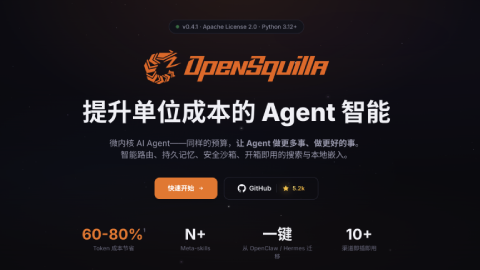
OpenSquilla 0.4.0 Released: AI Coding Can “Self-Verify” for the First Time
Chronology of Secret Experiments
Who is Louis Pasteur? The Visionary Who Revolutionized Modern Medicine