

The excitement and curiosity created by flight in human history has undoubtedly led us to ask the question: “Who Invented the Airplane?” Throughout history, many cognitive steps and innovations have played an important role in the evolution of aviation. So, who was the airplane found by? In this article, we will explore not only the first invention of the airplane but also its development process through the contributions of pioneers such as the Wright Brothers. While reaching the answer to the question “Who found the airplane?”, you will also gain valuable information about the basic principles of flight and modern uses. If you’re ready, let’s set off on a journey full of aviation!
The History of the Airplane
The history of the airplane is a reflection of humanity’s dream of the sky. For thousands of years, people have sought ways to fly and carried out various experiments. This long road, stretching from ancient times to the present, has been shaped by the efforts of many researchers and inventors. Looking at the origins of the aircraft, it is possible to understand how not just a vehicle, but one of the greatest inventions in human history, developed.
The history of the airplane begins with various myths starting in the Ancient Greek period. For example, the Greek philosopher Icarus falling while flying around the sun has become a symbol of human desire to fly in the air. Such legends show how deep a place the idea of flying occupies in the human mind.
The Middle Ages
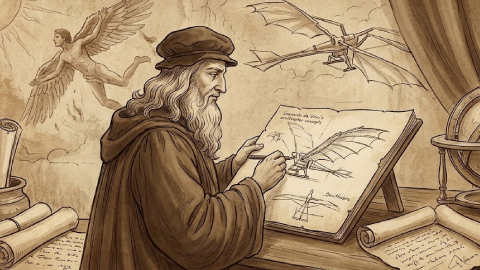
In the Middle Ages, with the Renaissance, great thinkers like Leonardo da Vinci made various designs to understand flight mechanics. Da Vinci’s drawings for “flying machines” formed the building blocks of modern aviation in many ways. However, it was not yet possible to fly in a real sense during these periods. The work done to understand the basic principles of flight would later combine with the inventions to be realized in subsequent centuries.
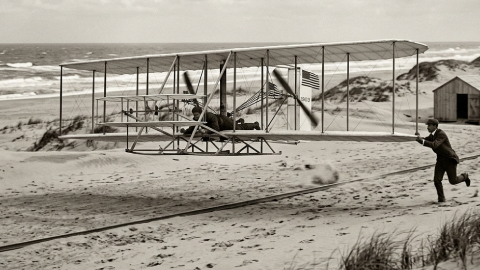
By the end of the 19th century, thanks to advances in science and technology, the theoretical and practical knowledge base necessary for the invention of airplanes began to form. When looking for the answer to the question “Who found the airplane?”, one must not forget the significant contributions of the Wright Brothers. In 1903, Wilbur and Orville Wright went down in history by successfully flying a motorized airplane. This invention opened a door for the human dream of crossing land borders and roaming freely in the sky to become a reality.
The history of the airplane is not limited only to the Wright Brothers; many people, important inventions, and developments have made great contributions to the evolution of aviation.
Important Turning Points in Aviation History
| Year | Event / Name | Significance |
| 1485 | Leonardo da Vinci | Prepared the first flying machine sketches (Ornithopter). |
| 1891 | Otto Lilienthal | Performed the first successful and repeatable glider flights. |
| 1903 | Wright Brothers | Completed the first controlled, motorized, and sustained flight. |
| 1939 | Heinkel He 178 | The world’s first jet-powered aircraft took to the air. |
| 1969 | Concorde | The first supersonic (faster-than-sound) passenger aircraft flight was made. |
Basic Principles of Flight
Flight is a combination of fundamental physical principles that allow for staying in the air and changing direction. Airplanes are wonders of aerodynamic structure and engineering. For this reason, certain basic principles must be taken into account for flight to occur.
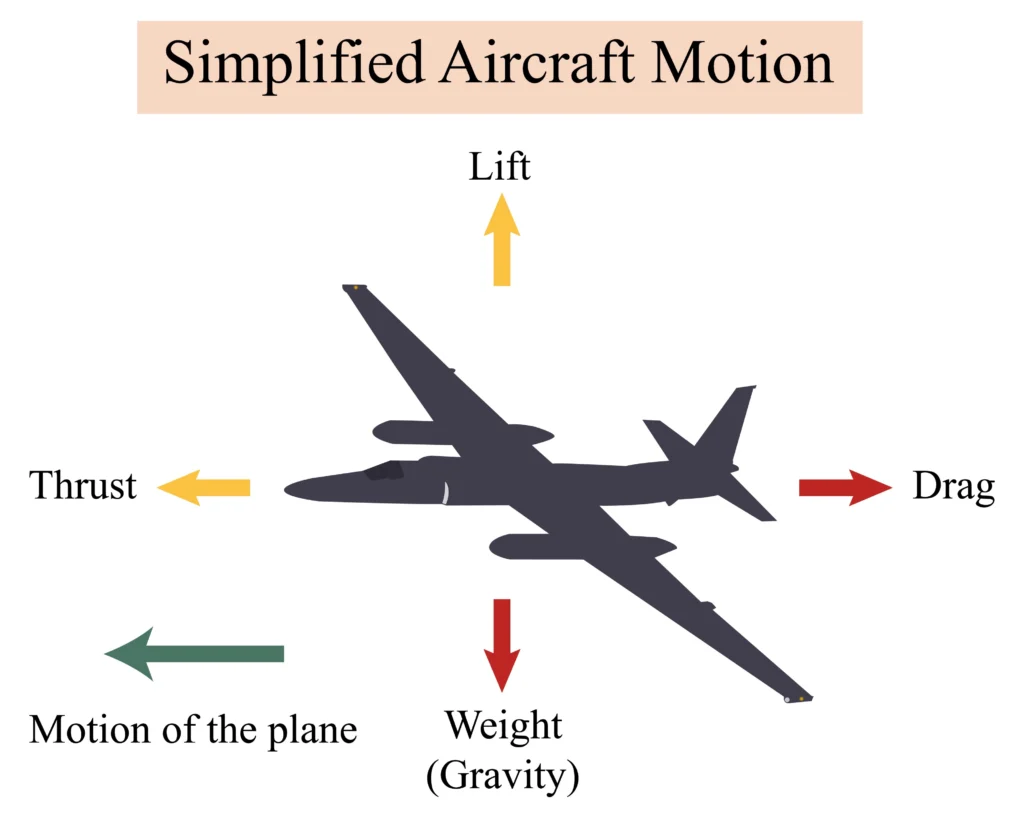
There are four fundamental forces proposed for flight to occur: thrust, weight, lift, and drag. When these four forces come together, they make it possible for the aircraft to move through the air.
1. Thrust Thrust is the force that allows the airplane to move forward. Aircraft engines produce the thrust force. Modern airplanes generally use jet engines, while some small aircraft work with propeller engines.
2. Weight The weight of the aircraft is extremely important in terms of providing a power balance that can sustain its existence. Weight is the force that keeps the aircraft tied to the ground and originates from gravity.
3. Lift Lift is one of the forces that allow the aircraft to stay in the air. When air moves quickly over the wings, the difference in air pressure on the upper and lower surfaces creates a force that pushes the wings upward.
4. Drag Finally, the force of drag is also one of the basic principles of flight. The interaction of the aircraft with the air during its progress controls the effect of the drag force.
Who Invented the Airplane?
The first invention of the airplane is a result of humanity’s desire to fly throughout history. Humans have made various attempts for centuries to realize their passion for gliding in the sky.
First Attempts and Innovation
Around the 1590s, some early period scientists like the Italian inventor Giovanni Battista Danti tried to develop various tools to fly. By the 19th century, Sir George Cayley determined the first scientific principles of aircraft design.
Success of the Wright Brothers
The question “Who first invented the airplane?” is generally answered with the Wright brothers. On December 17, 1903, Orville and Wilbur Wright performed a historic experiment in the town of Kitty Hawk, North Carolina, which opened a new era in flight history. The Wright Brothers became the first people to perform a manned flight by developing a largely controllable aircraft.
First Flight Controversies: Alberto Santos-Dumont
There are also different views in the aviation world regarding the question “Who really invented the airplane first?”. While the Wright Brothers are accepted as pioneers in the invention of the airplane, the contributions of the Brazilian inventor Alberto Santos-Dumont cannot be denied. The flight he performed in Paris in 1906 proved that an airplane could take off under its own power without receiving outside help (such as a launching rail). This situation has been described by some circles as the “first airplane to take off on its own” and has taken its place in flight history.
The Wright Brothers and the Development of the Airplane
One of the most important turning points in aircraft history is undoubtedly the work of the Wright Brothers. Appearing as one of the answers to the question “Who invented the airplane?”, the Wright Brothers are the people who successfully flew the first motorized airplane in 1903.
Wilbur and Orville Wright created a revolution in the field of aviation with the innovative work they carried out at the end of the 19th and the beginning of the 20th century. The two brothers primarily gained knowledge of air currents and the mechanical features of flight by making various glider trials starting from 1900.
The First Flight
By 1903, these brothers built the first motorized airplane called the “Flyer.” This historic flight, carried out on December 17, 1903, lasted 12 seconds. In addition, it covered a distance of 36.5 meters. By 1905, the Wright Brothers stayed in the air for 39 minutes with a more advanced model, the “Flyer III,” performing the longest and most successful flight made up to that time.
Other Important Inventions and Innovators Related to the Airplane
There are many important inventions and innovators who contributed to the development of aviation.
- Sir George Cayley: He was a pioneer trying to understand the basic principles of flight at the beginning of the 19th century.
- Otto Lilienthal: The German aviator played a critical role in the development of airplanes with the gliders he developed.
- Hiram Maxim: He performed motorized drag tests with the airplane he built in 1894.
- Paul MacCready and Burt Rutan: They revolutionized the sector with light and efficient aircraft designs. MacCready designed the first human-powered aircraft in 1977.
Development of Airplane Technology
Airplane technology has shown great changes and innovations in many areas throughout history.
Airflow and Aerodynamics While the wing structures of airplanes are optimized according to these principles, the fuel efficiency of airplanes has been increased thanks to aerodynamic design.
Material Sciences and Innovation While the first airplanes were built with combinations of wood and metal, today lighter and more durable composite materials are used.
Electronic and Avionic Systems The development of navigation, communication, and control systems of airplanes has transformed modern aviation. Autopilot systems provide safe flight.
Future Aviation and Sustainability
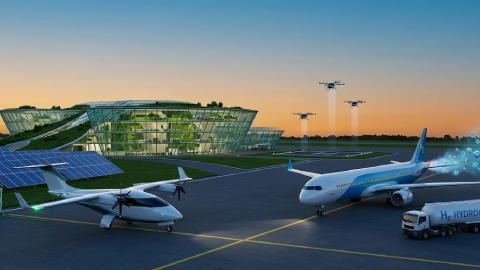
Airplane technology has reached a new threshold today. Work on electric and hybrid aircraft has gained momentum in order to reduce environmental impacts. These new technologies, which aim to minimize the carbon footprint, are shaping the future of aviation. In addition, flying taxis (eVTOL), which are expected to revolutionize urban transportation, and hydrogen-fueled aircraft, which could replace fossil fuels, are seen as the next steps in the technological evolution of the airplane.
Modern Uses of the Airplane
The uses of airplanes in the modern world have reached a level far beyond just human transportation.
- Commercial Air Transport: It carries millions of passengers quickly.
- Cargo Air Transport: It is the most important means of transport for international trade and e-commerce.
- Military Aviation: UAVs used for defense, attack, and reconnaissance are part of modern technology.
- Agricultural Aircraft: Provides high efficiency in spraying and seeding operations.
- Emergency Aircraft: Plays a life-saving role in firefighting and medical emergencies.
Surprising Facts About Aviation
- The Largest Airplane: The world’s largest airplanes can have a wingspan wider than a football field.
- Speed Record: The fastest manned aircraft, the Lockheed SR-71 Blackbird, can reach more than three times the speed of sound.
- The Black Box: The “black box” in airplanes is actually bright orange so it can be found easily.
- The Shortest Flight: The world’s shortest commercial flight is between two islands and takes only about one minute.
Frequently Asked Questions
In what year was the airplane invented? The first controlled and motorized flight was performed by the Wright Brothers on December 17, 1903.
Who tried the airplane before the Wright Brothers? Before the Wright Brothers, names like Sir George Cayley and Otto Lilienthal made important flight attempts with gliders.
How long did the first flight last? The first motorized flight performed by the Wright Brothers lasted a total of 12 seconds.
How do airplanes stay in the air? Airplanes stay in the air thanks to the lift force created by the pressure difference generated by the wing structures.
In conclusion, the history of the airplane is a product of humanity pursuing the dream of flying, technological progress, and the coming together of many innovative ideas. While airplanes carry humanity from the earth’s surface to the sky, they have allowed many dreams to turn into reality throughout history.



Discover Dispatcharr: The Ultimate Open-Source IPTV and EPG Management Powerhouse
What is HAARP? Artificial Earthquakes Tesla’s Mysterious Legacy
Alibaba Issues Notice: Full Ban on All Anthropic Claude Series Models and Claude Code Programming Agent Effective July 10
OpenSquilla 0.4.0 Released: AI Coding Can “Self-Verify” for the First Time