

Today, when we ask our phones a question or have AI generate a piece of art, it feels entirely natural. But have you ever wondered: Who first came up with the idea that “machines can think just like us”? Who was the first to wave this digital magic wand?
💡Who Founded the Internet? – The Birth of an Indispensable Part of Our Lives…
The truth is, AI doesn’t have a single “inventor.” Instead, it is a massive relay race spanning decades. To answer the question “Who invented AI?”, we need to meet the heroes of this extraordinary journey.
The Spark: Who is the Grandfather of AI?
If AI has a “grandfather,” it is undoubtedly Alan Turing. In the 1950s, when computers were the size of entire rooms, Turing asked the iconic question: “Can machines think?”
He introduced the “Turing Test,” a benchmark we still use today to measure machine intelligence. By laying the philosophical and theoretical foundations, Turing ignited the spark that eventually led to modern conversational agents like ChatGPT.
The Godfather: Who Coined the Term “Artificial Intelligence”?
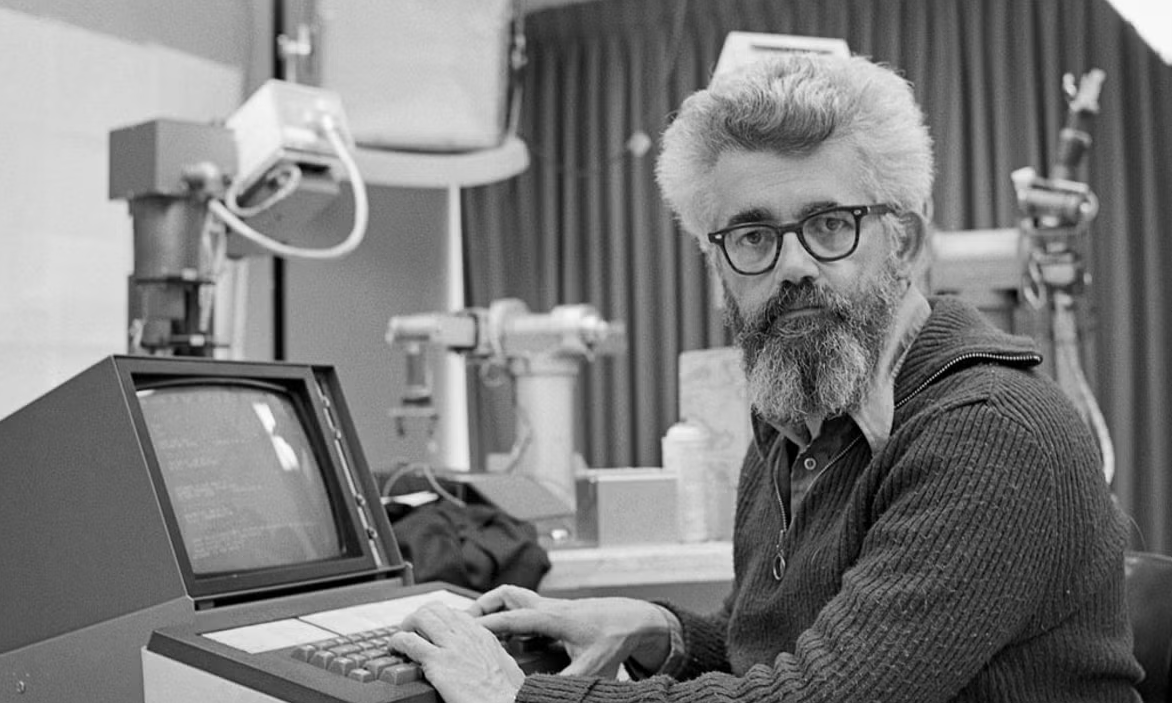
If we look for the person who gave the field its name, the answer is John McCarthy.
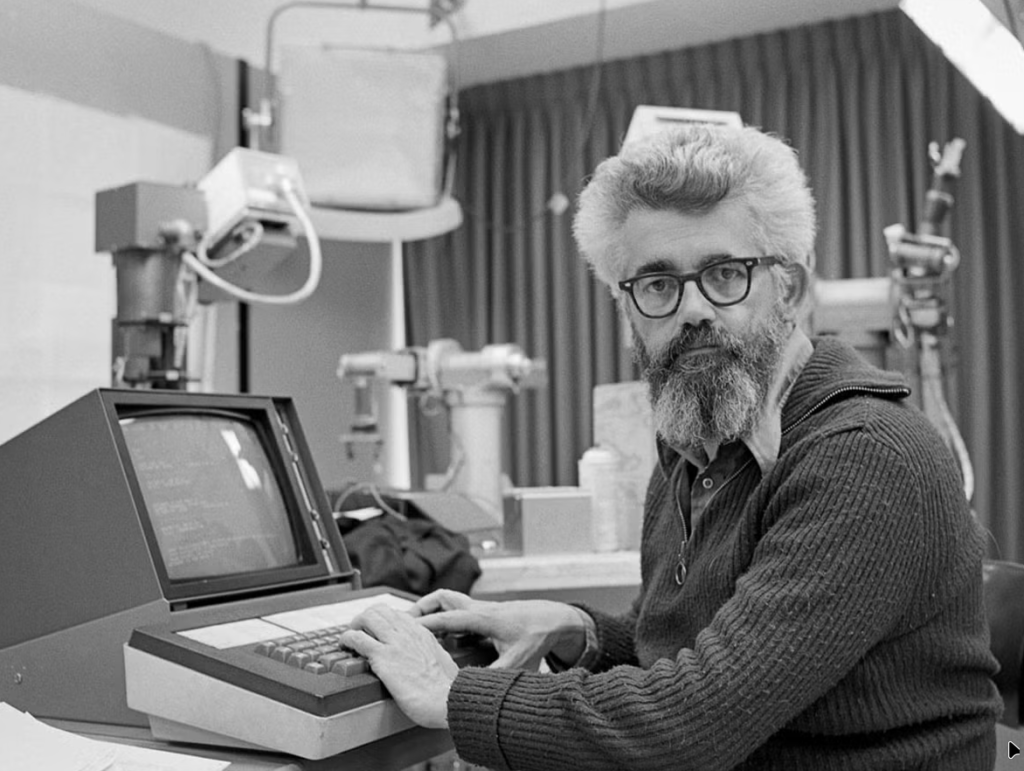
In 1956, McCarthy organized the Dartmouth Conference, bringing together a brilliant group of scientists. He proposed the term “Artificial Intelligence” and challenged the group: “Let’s build machines that simulate human intelligence.” Giants like Marvin Minsky and Herbert Simon, who were in that room, are now considered the “founding fathers” of the technology we use today.
The Modern Revolution: Who Taught Machines to “Learn”?
For a long time, AI went through quiet periods known as “AI Winters.” However, in the 2010s, Geoffrey Hinton changed everything. Instead of manually coding every rule for a computer, Hinton developed Deep Learning, a way for machines to “learn like a human brain.”
If your phone recognizes your face or understands your voice today, it is largely thanks to Hinton’s revolution in neural networks.
Today’s Giants: Who is Leading the Race Now?
In the modern era, the list of “AI inventors” has shifted from individuals to world-changing laboratories. These are the powerhouses shaping our daily lives:
- OpenAI: Led by Sam Altman, this team brought AI out of the lab and into our pockets with ChatGPT. They proved that AI could be a personal assistant for everyone, not just a tool for scientists.
- Google DeepMind: Known for defeating world champions in complex games like Go (AlphaGo), they are now pushing the boundaries of multimodal intelligence with Gemini, an AI that can see, hear, and write simultaneously.
- DeepSeek: This rising star has recently shaken the industry by proving that high-performing AI models (like the R1 series) can be built with incredible efficiency and lower costs, challenging the traditional “bigger is better” mindset.
- Kiwi: Representing the next generation of accessibility, Kiwi focuses on making complex AI workflows practical and user-friendly for the end consumer, ensuring technology serves everyday needs seamlessly.
Summary: Who Invented AI?
There is no single answer because AI is the result of collective genius:
| The Question | The Answer | The Contribution |
| Who conceived the idea? | Alan Turing | Imagined the “thinking machine.” |
| Who named it? | John McCarthy | Coined the term “Artificial Intelligence.” |
| Who taught it to learn? | Geoffrey Hinton | Pioneered the Deep Learning revolution. |
| Who brought it to the masses? | OpenAI & Google | Made AI accessible via ChatGPT and Gemini. |
| Who optimized efficiency? | DeepSeek & Kiwi | Made AI faster, smarter, and more practical. |


Discover Dispatcharr: The Ultimate Open-Source IPTV and EPG Management Powerhouse
What is HAARP? Artificial Earthquakes Tesla’s Mysterious Legacy
Alibaba Issues Notice: Full Ban on All Anthropic Claude Series Models and Claude Code Programming Agent Effective July 10
OpenSquilla 0.4.0 Released: AI Coding Can “Self-Verify” for the First Time